Owncast is an open-source, self-hosted live streaming solution for broadcasting videos, classes, presentations, games, talks, and more, completely independent of any vendor or service provider. It is highly customizable, flexible, and can be deployed in minutes either on-premises or in the cloud.
DEPLOY OWNCAST AS A DOCKER CONTAINER
sudo apt install docker.io -y
sudo docker run -p 8080:8080 -p 1935:1935 -it gabekangas/owncast:latest
It is also recommended to map a local directory to the container for easy configuration backups.
sudo docker run -v /owncast-config:/app/data -p 8080:8080 -p 1935:1935 -it gabekangas/owncast:latest
INSTALL OWNCAST DIRECTLY ON THE SERVER
sudo apt install unzip -y
sudo curl -s https://owncast.online/install.sh | sudo bash
cd owncast && sudo ./owncast
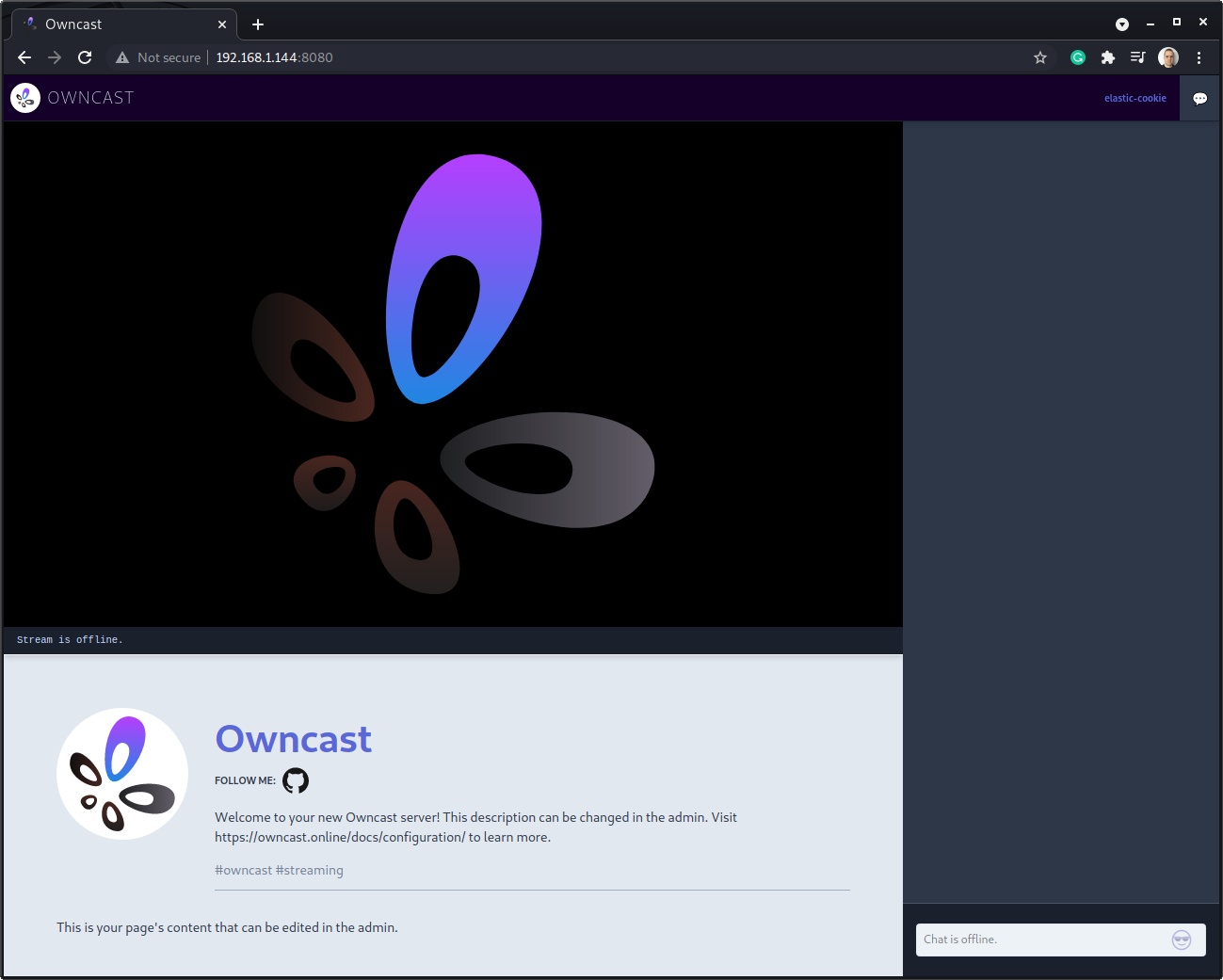
With either deployment method, the default page will be available at http://192.168.1.144:8080/ (replace the IP as needed).
The administration dashboard is at http://192.168.1.144:8080/admin/. The default username is admin and the default password is abc123 (which is also the default stream key).
CHANGE THE PASSWORD IMMEDIATELY!
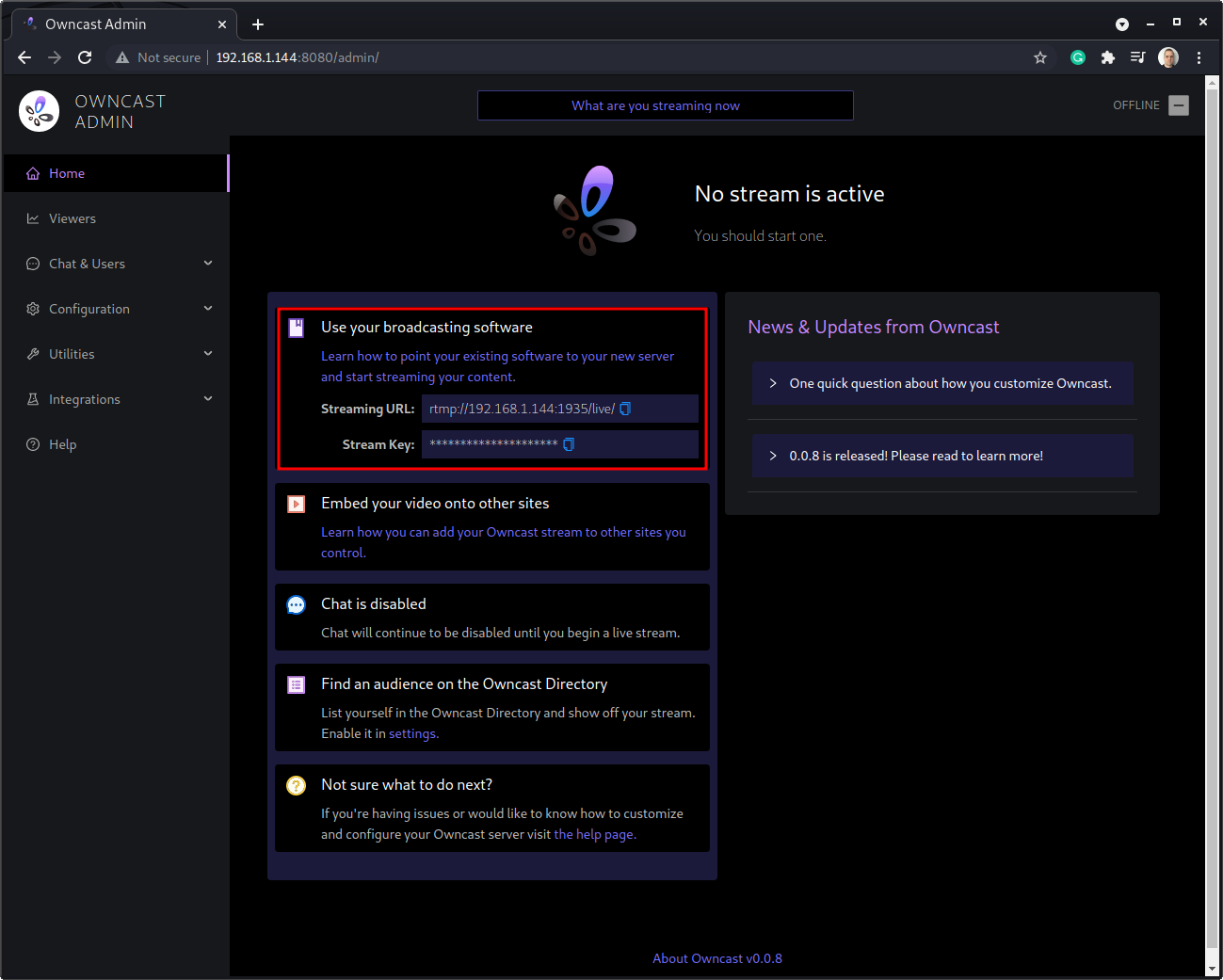
By default, anyone with access to the web interface can watch the stream and send messages in the chat.
HOW TO STREAM
You can stream from any application that supports RTMP output with a stream key, such as VLC, OBS, and many others.
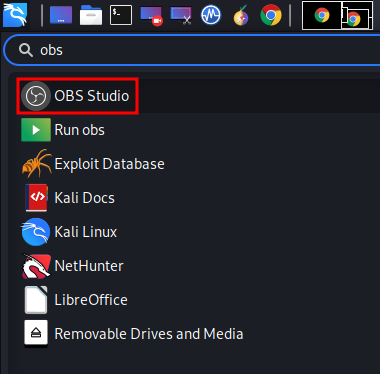
Install OBS Studio on your workstation (Linux, Windows, or Mac). On Debian-based distros, run:
sudo apt install ffmpeg obs-studio -y
The application will appear in your main menu:
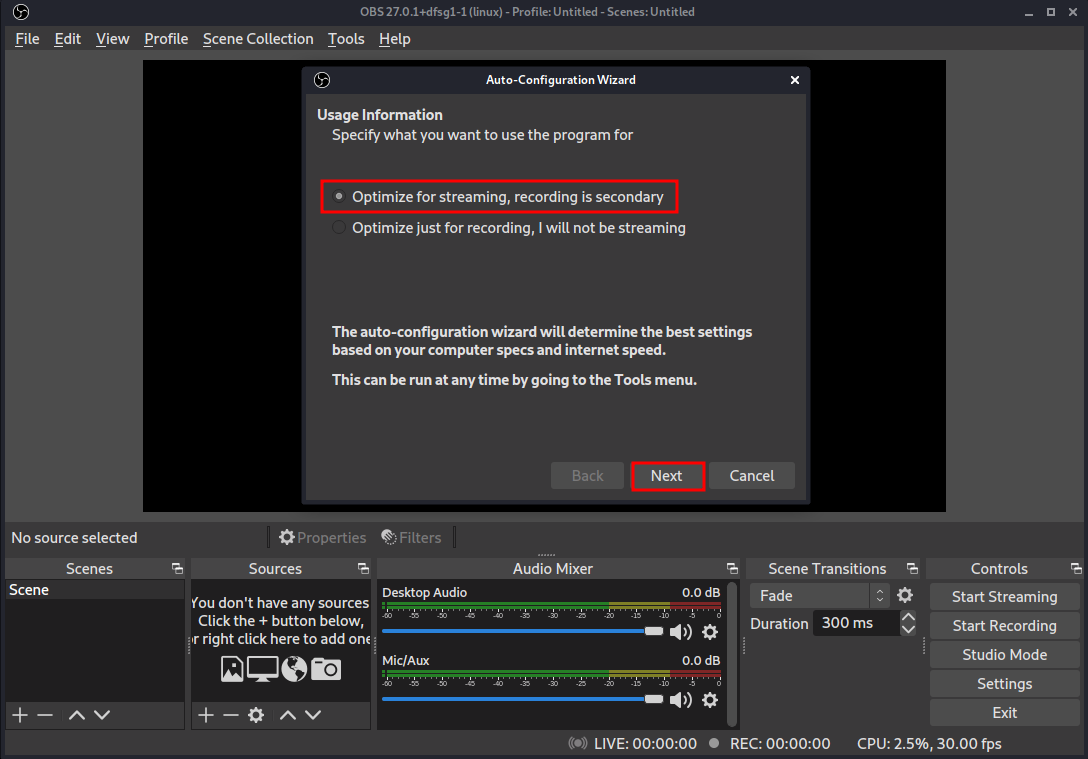
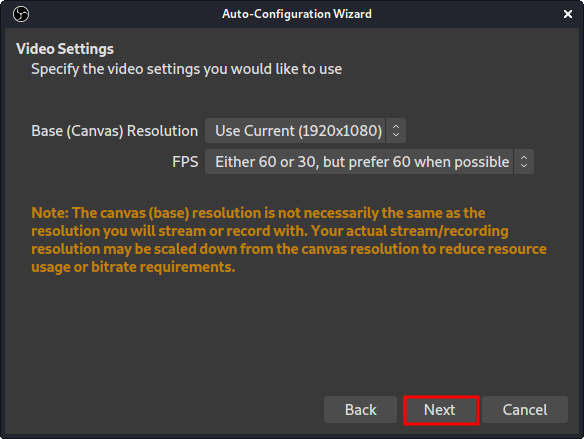
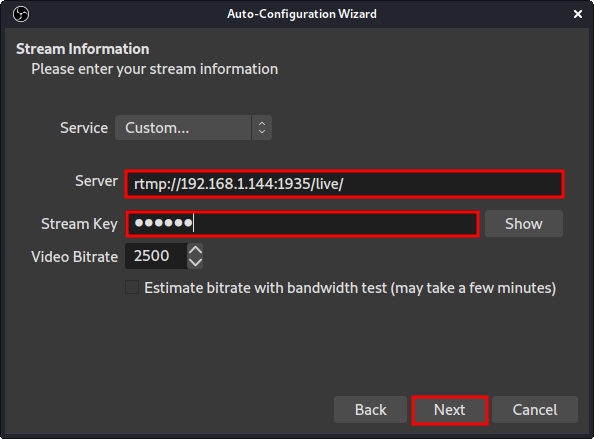
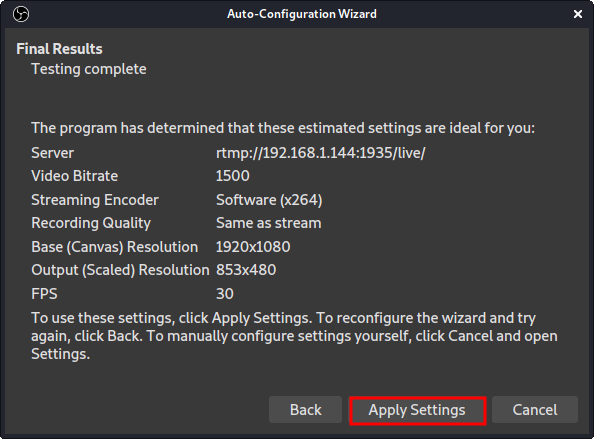
Click START STREAM and your broadcast will be live to all connected clients.
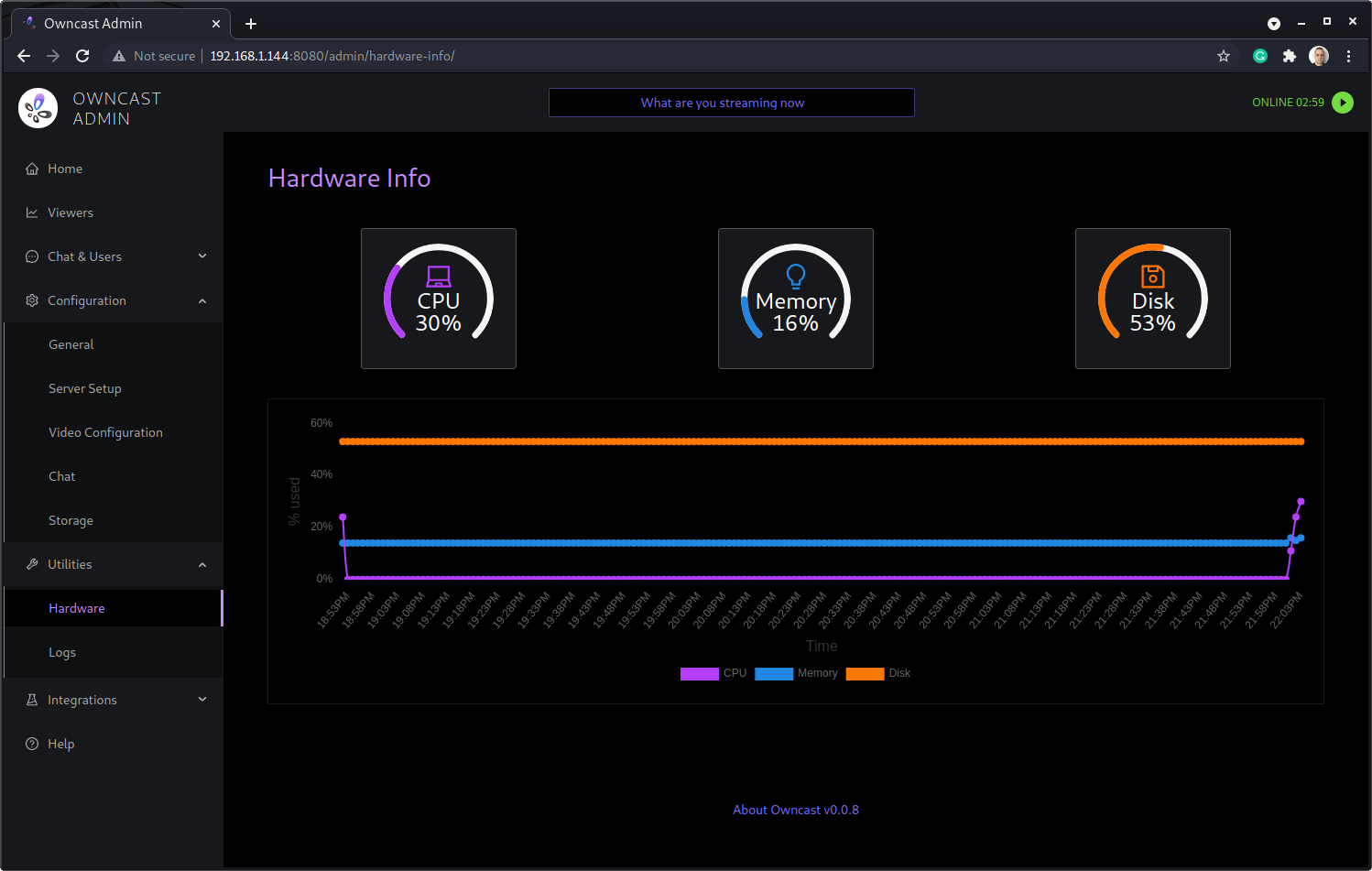
Monitor resource usage and the number of connected clients to ensure your server hardware can handle the load.