TurnKey Core is the base operating system for all TurnKey GNU/Linux solutions [Link].
It’s based on Debian and serves as the convenient starting point for custom system integrations, also known as appliances.
The idea is to build and work without dealing with all the moving pieces of the infrastructure. It comes out-of-the-box with automation for daily security updates, 1-click backup/restore/migrate, and system monitoring with optional email alerts. Everything is managed through a friendly web control panel powered by Webmin [Link].
Other popular features:
- Dynamic DNS
- Web shell
- Certbot from Let’s Encrypt
- SMTP relay
- Easy to configure via Web GUI:
- Network and firewall
- Backup and migration
- Users and groups management
- Install, remove, and update packages
- HTML5 file manager
- Partition and volumes management
TurnKey Virtual Appliances are pre-configured systems designed to perform a specific function or set of functions, such as file sharing, web hosting, virtualization, networking/VPN, and more.
Most popular appliances:
- LAMP Stack
- WordPress
- Observium
- Domain Controller
- ownCloud
- OpenLDAP
- GitLab
- Media Server
INSTALLATION
TurnKey Core Linux is available in multiple formats:
- Bootable ISO image
- Pre-installed Virtual Machine and Cloud images
- Container (LXC/Docker)
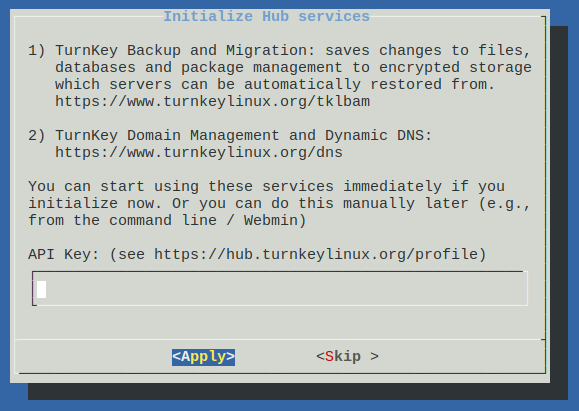
On first login, it will prompt for an API key to link the appliance to a TurnKey Hub account.
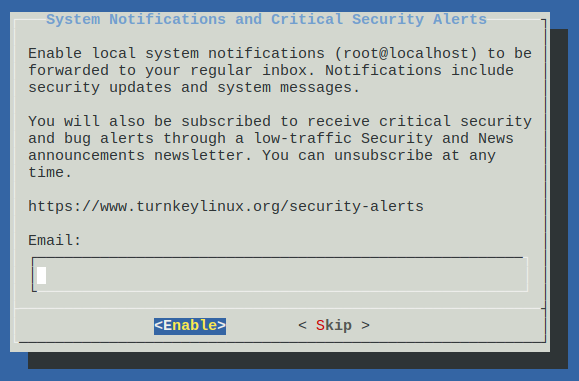
Next, enter the system administrator’s email address for notifications and alerts:
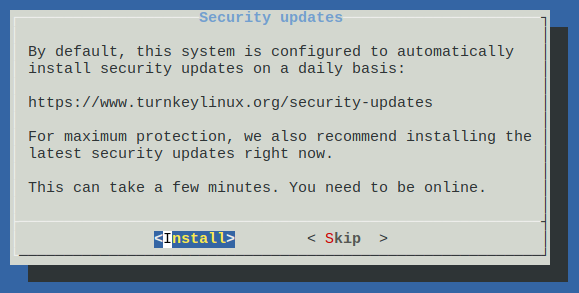
It will then pull and install the latest security updates:
Once installation is complete, it displays the addresses to log in using the root credentials:
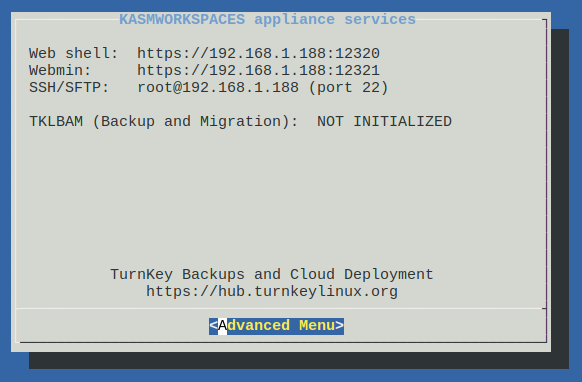
Note: It is recommended not to expose these ports to the public internet. If installed in a public cloud, restrict access to those ports to your own IP only.
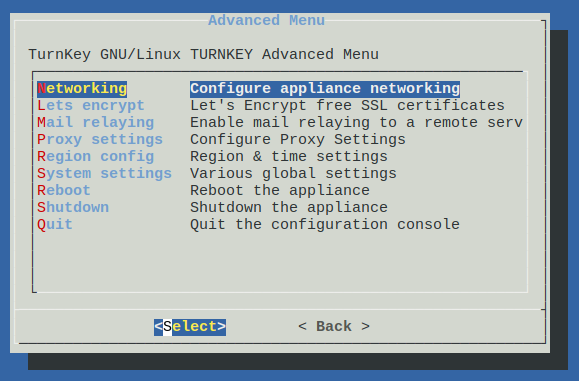
Optionally, open the Advanced Menu for quick adjustments such as keyboard layout, timezone, and hostname.
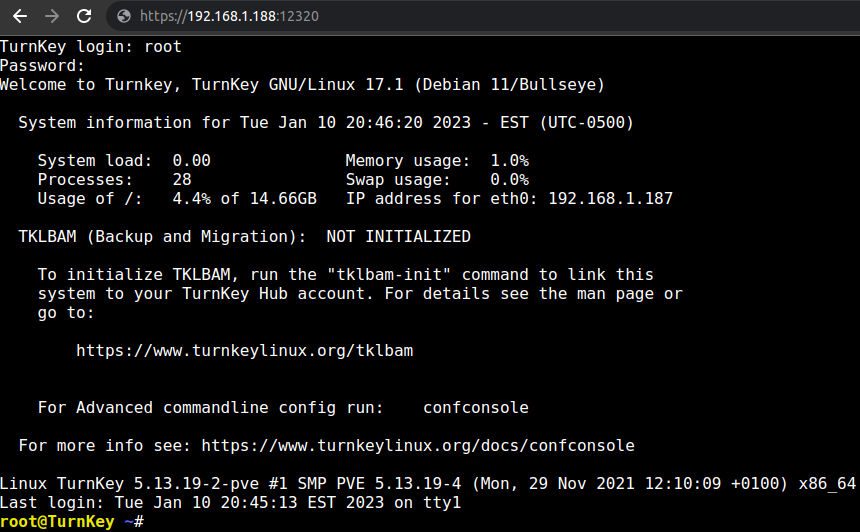
WEB SHELL
The web shell is powered by Shell in a Box [Link].
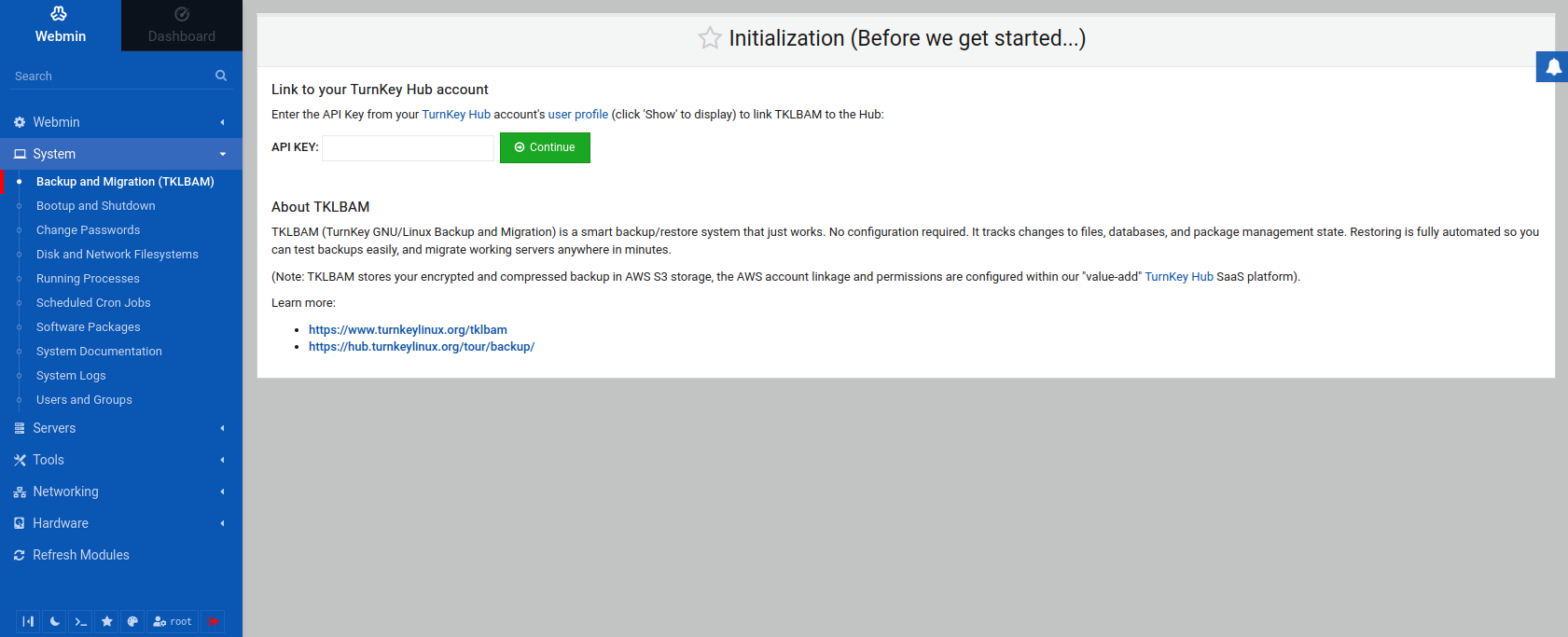
WEB MANAGEMENT INTERFACE
A tuned installation of Webmin provides a simple web interface for configuring all common system services [Link].
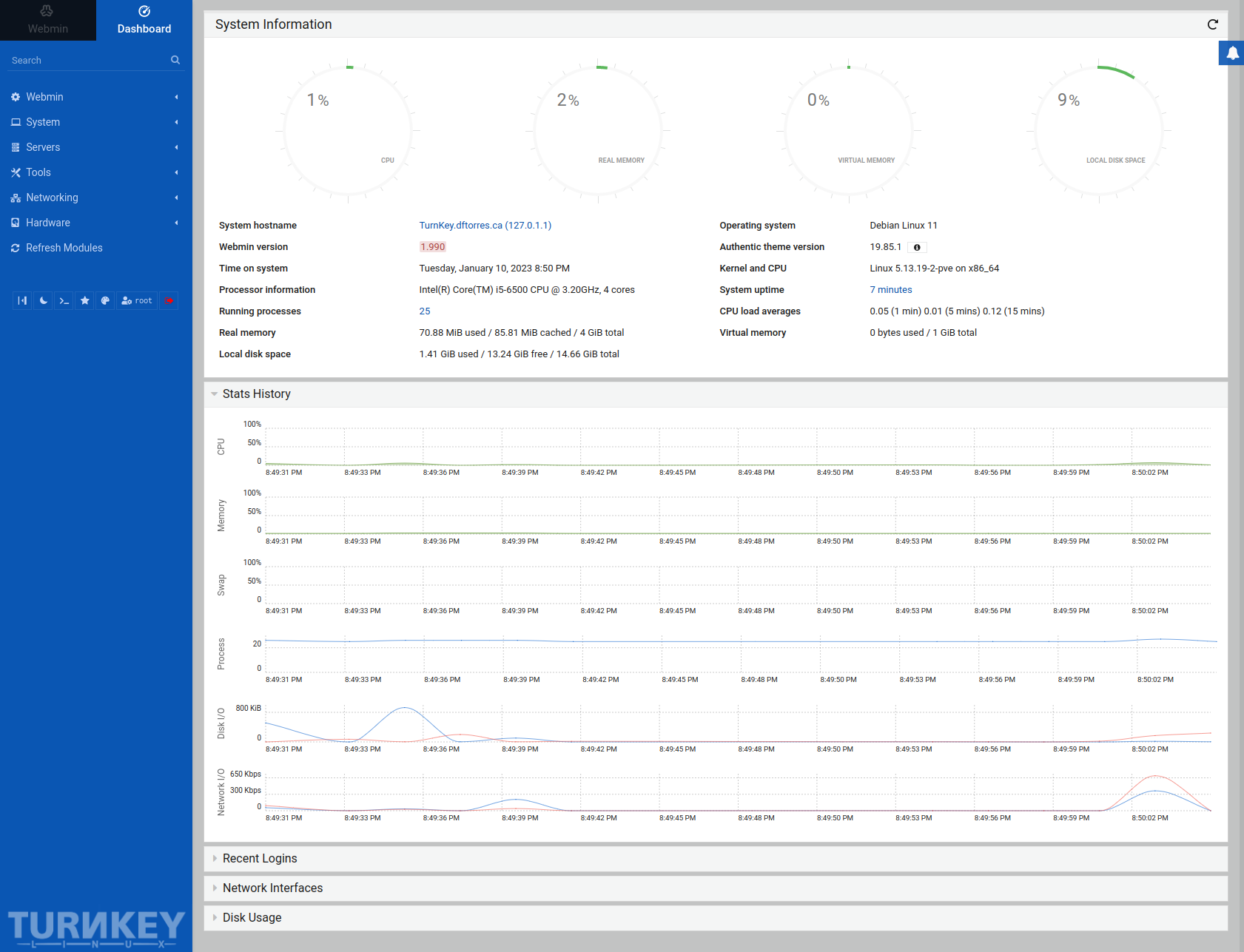
It also includes a dashboard for easy visualization of system resources and usage: